
Estimated read time: 7 mins
Q4 Quarterly Report 2024
Another stellar year for US equities
Another stellar year for US equities
So that’s a wrap for 2024, a year in which US equites once again outperformed most other assets.
So that’s a wrap for 2024, a year in which US equites once again outperformed most other assets.
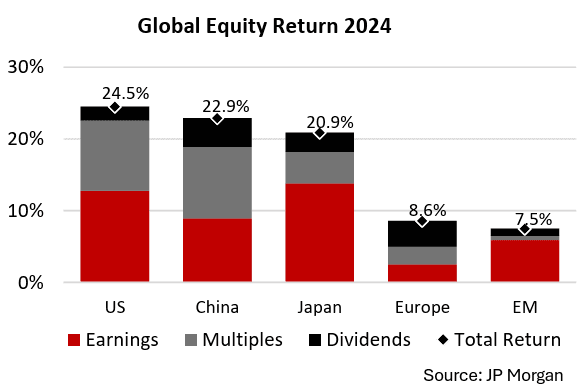
The S&P 500 headline index returned over 24% for the year, leaving it just short of last year’s 25% gain. This has been the sentiment leading index’s best two-year performance since the late 1990s, and it has once again outperformed all other main regional indices. As US equities represent around two thirds of the world market capitalization, they helped lift the MSCI World Index by 17% for the year. European equities relatively underperformed once again with a high single digit gain, but Chinese equities finally started to recover some lost ground by climbing over 22%, with all the gains coming after the announcement of some much needed stimulus. US and European government bonds had a much less impressive year, although they managed to eke out positive returns for the second year in a row. The Bloomberg Dollar Spot Index had its best year in nearly a decade, and gold had its best year since 2010 with a near 27% gain off the back of significant central bank demand for the bullion. This has been a terrific period for investors, with global equities marching past a range of challenges that could have potentially dampened the bullish sentiment.
The S&P 500 headline index returned over 24% for the year, leaving it just short of last year’s 25% gain. This has been the sentiment leading index’s best two-year performance since the late 1990s, and it has once again outperformed all other main regional indices. As US equities represent around two thirds of the world market capitalization, they helped lift the MSCI World Index by 17% for the year. European equities relatively underperformed once again with a high single digit gain, but Chinese equities finally started to recover some lost ground by climbing over 22%, with all the gains coming after the announcement of some much needed stimulus. US and European government bonds had a much less impressive year, although they managed to eke out positive returns for the second year in a row. The Bloomberg Dollar Spot Index had its best year in nearly a decade, and gold had its best year since 2010 with a near 27% gain off the back of significant central bank demand for the bullion. This has been a terrific period for investors, with global equities marching past a range of challenges that could have potentially dampened the bullish sentiment.
Dec
Nov
Oct
Q4
2024
Equities
MSCI World
-2.6&
4.6%
-2.0%
-0.2%
18.7%
S&P 500
-2.4%
5.8%
-0.9%
2.3%
24.5%
EURO STOXX
-0.5%
1.1%
-3.3%
-2.7%
8.6%
Nikkei 225
4.5%
-2.2%
3.1%
5.3%
20.9%
MSCI UK
-1.3%
2.6%
-1.4%
-0.2%
9.5%
MSCI EM
-0.1%
-3.6%
-4.5%
-8.0%
7.5%
MSCI China
3.6%
-2.9%
-4.6%
-3.9%
22.9%
Government Bonds
US Treasuries
-1.5%
0.8%
-2.4%
-3.1%
0.7%
EUR Sovereigns
-1.4%
2.3%
-1.0%
-0.1%
1.9%
Corporate Bonds
US High Grade
-1.8%
1.2%
-2.3%
-2.8%
2.8%
EUR High Grade
-0.4%
1.7%
-0.4%
0.8%
4.7%
Commodities
Commodity Index
3.3%
0.1%
0.5%
3.8%
9.3%
Oil (Crude)
6.0%
-1.5%
2.5%
7.0%
8.7%
Copper
-2.8%
-5.3%
-3.4%
-11.1%
1.9%
Gold
-1.1%
-3.0%
3.8%
-0.5%
26.6%
Currencies
EUR/USD
-2.0%
-2.7%
-2.7%
-7.2%
-6.3%
EUR/GBP
-0.5%
-1.6%
1.5%
-0.6%
-4.6%
EUR/JPY
2.6%
-4.1%
3.6%
1.9%
4.5%
Dec
Nov
Oct
Q4
2024
MSCI World
-2.6%
4.6%
-2.0%
-0.2%
18.7%
S&P 500
-2.4%
5.8%
-0.9%
2.3%
24.5%
EURO STOXX
-0.5%
1.1%
-3.3%
-2.7%
8.6%
Nikkei 225
4.5%
-2.2%
3.1%
5.3%
20.9%
MSCI UK
-1.3%
2.6%
-1.4%
-0.2%
9.5%
MSCI EM
-0.1%
-3.6%
-4.5%
-8.0%
7.5%
MSCI China
3.6%
-2.9%
-4.6%
-3.9%
22.9%
Equities
America’s Economic Puzzle
US Economic Exceptionalism
US Economic Exceptionalism
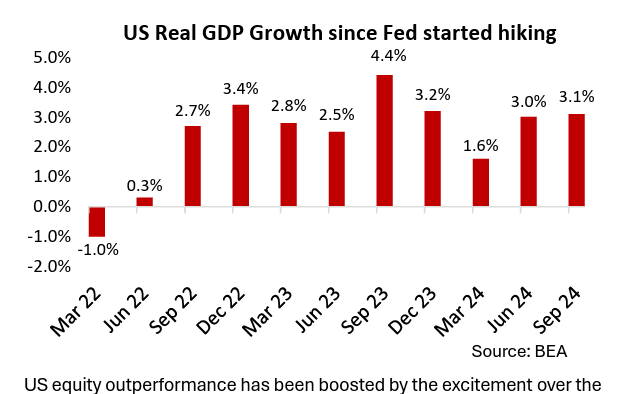
US economic exceptionalism has been a persistent theme over the last couple of years, even though the Federal reserve raised interest rates by 500 basis points from March 2022. To the surprise of most economists, the US economy has grown above its long-run growth rate of 2% since the Fed started raising rates. This anomaly was made possible because (i) the economy has proven to be less sensitive to interest rates (households and corporates locked in low fixed term debt during the pandemic), (ii) very loose fiscal policy (US is running a 6% deficit at a time of full employment), and (iii) record levels of capex spending, as the largest technology companies develop vast networks of AI infrastructure for future adoption (Amazon, Goole, Meta, Microsoft, Oracle).
US economic exceptionalism has been a persistent theme over the last couple of years, even though the Federal reserve raised interest rates by 500 basis points from March 2022. To the surprise of most economists, the US economy has grown above its long-run growth rate of 2% since the Fed started raising rates. This anomaly was made possible because (i) the economy has proven to be less sensitive to interest rates (households and corporates locked in low fixed term debt during the pandemic), (ii) very loose fiscal policy (US is running a 6% deficit at a time of full employment), and (iii) record levels of capex spending, as the largest technology companies develop vast networks of AI infrastructure for future adoption (Amazon, Goole, Meta, Microsoft, Oracle).
US equity outperformance has been boosted by the excitement over the advances in generative AI, but the robust economic backdrop has also been a crucial support. Equities sold off in 2022 over fears the higher rates to tackle inflation would slow the economy down too much and cause a recession. That clearly didn’t happen, as the US economy reaccelerated since then, which meant earnings generally didn’t struggle as much as feared. The economy’s strength has supported the stock market’s rise by trickling down to corporate profits.
US equity outperformance has been boosted by the excitement over the advances in generative AI, but the robust economic backdrop has also been a crucial support. Equities sold off in 2022 over fears the higher rates to tackle inflation would slow the economy down too much and cause a recession. That clearly didn’t happen, as the US economy reaccelerated since then, which meant earnings generally didn’t struggle as much as feared. The economy’s strength has supported the stock market’s rise by trickling down to corporate profits.
Even though some sectors suffered a shallow earnings recession, the strength of others made up for it. If the US economy continues to chug along and fears of a recession don’t resurface, equities can continue to do well. But when we look at this year’s outsized returns, the level investors have been willing to pay for earnings has driven a substantial part of the overall returns. A lot of valuation has been put into the market at this point and there is little room left for further valuation multiple expansion (P/E ratios).
Even though some sectors suffered a shallow earnings recession, the strength of others made up for it. If the US economy continues to chug along and fears of a recession don’t resurface, equities can continue to do well. But when we look at this year’s outsized returns, the level investors have been willing to pay for earnings has driven a substantial part of the overall returns. A lot of valuation has been put into the market at this point and there is little room left for further valuation multiple expansion (P/E ratios).
There were some moments this year when it looked like the stock market was due for a reversal, but they proved short lived. While the S&P 500 slid from mid-July through early August, it soon resumed its march higher as the mid-summer worries about tech earnings faded. Valuation concerns are particularly acute for the world’s largest companies which are tied to AI, given the uncertainty about whether the technology will live up to its hype. This is a big risk, as these mega cap firms have contributed nearly 60% of the S&P 500’s gains since the October 2022 low. This has been a historically concentrated rally where these expensive stocks got more expensive - even though their earnings have been growing at a fantastic rate.
There were some moments this year when it looked like the stock market was due for a reversal, but they proved short lived. While the S&P 500 slid from mid-July through early August, it soon resumed its march higher as the mid-summer worries about tech earnings faded. Valuation concerns are particularly acute for the world’s largest companies which are tied to AI, given the uncertainty about whether the technology will live up to its hype. This is a big risk, as these mega cap firms have contributed nearly 60% of the S&P 500’s gains since the October 2022 low. This has been a historically concentrated rally where these expensive stocks got more expensive - even though their earnings have been growing at a fantastic rate.
One definition of a bubble is a good idea that has gone too far, and the markets willingness to continue to pay such a premium for the world’s best companies has now likely gone too far. For the rally to continue, earnings will need to broaden out from here. The vast outperformance of the market weighted S&P 500 index over its equal weighted counterpart (where each of the 500 companies represents 0.2%) depicts this dynamic very well. There is a strong argument that the equal weighted index (a good representation for the other 493 stocks) will need to do more of the heavy lifting for the rally to endure this year.
One definition of a bubble is a good idea that has gone too far, and the markets willingness to continue to pay such a premium for the world’s best companies has now likely gone too far. For the rally to continue, earnings will need to broaden out from here. The vast outperformance of the market weighted S&P 500 index over its equal weighted counterpart (where each of the 500 companies represents 0.2%) depicts this dynamic very well. There is a strong argument that the equal weighted index (a good representation for the other 493 stocks) will need to do more of the heavy lifting for the rally to endure this year.
Looking Ahead.
The effects of the two big themes that dominated markets in 2024 should continue to impact the global economy for the next few years - elections and inflation. The outcome of the US election is likely to usher in big policy changes, but so far, the market’s reaction to Trump’s victory has ignored the risks posed by his tariff and tax-cut plans.
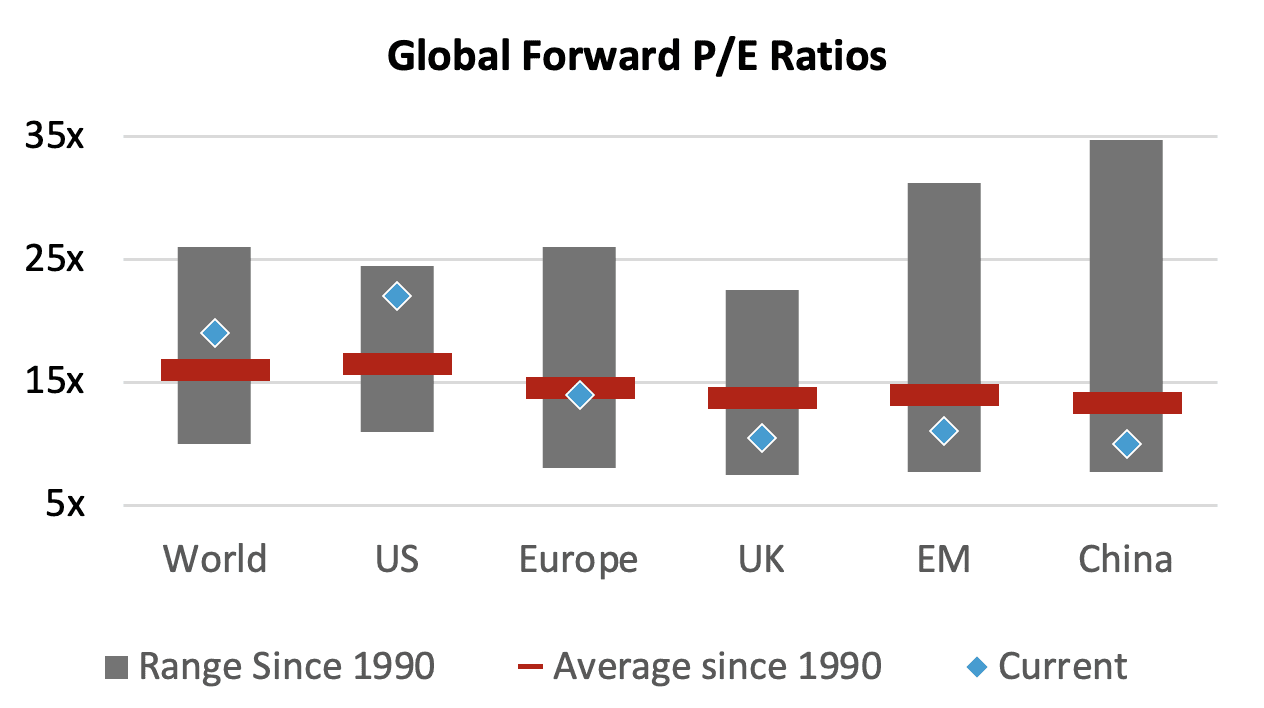
These proposals could rekindle inflation and hurt global trade, and inflation is already still above the Fed’s target. The Fed have already signalled that there would be fewer interest-rate cuts this year, but stocks are riding high on a lot of optimism that Trump 2.0 will be good for the market. Should he disappoint in the months ahead, then we have a vulnerable US equity market because of their valuations. The forward P/E multiple for the S&P 500 is now approaching 22x, (30-year average is 16.6x), while its Price/Book ratio has just reached its highest ever level.
Looking Ahead.
The effects of the two big themes that dominated markets in 2024 should continue to impact the global economy for the next few years - elections and inflation. The outcome of the US election is likely to usher in big policy changes, but so far, the market’s reaction to Trump’s victory has ignored the risks posed by his tariff and tax-cut plans.
These proposals could rekindle inflation and hurt global trade, and inflation is already still above the Fed’s target. The Fed have already signalled that there would be fewer interest-rate cuts this year, but stocks are riding high on a lot of optimism that Trump 2.0 will be good for the market. Should he disappoint in the months ahead, then we have a vulnerable US equity market because of their valuations. The forward P/E multiple for the S&P 500 is now approaching 22x, (30-year average is 16.6x), while its Price/Book ratio has just reached its highest ever level.
Europe
Europe
European economic growth is going through a soft patch, with real GDP growth of 0.8% expected for 2024. This headline figure masks a big divergence within the region, as the Spanish economy has been doing very well (mainly focussed on services), while Germany and France have struggled. Germany contracted for the second consecutive year, as its key manufacturing sector faces big challenges. China’s struggles are partly to blame, but so too is the political uncertainty. Europe’s inflation numbers have been much better, so this will allow the ECB to cut rates to stimulate the region.
European economic growth is going through a soft patch, with real GDP growth of 0.8% expected for 2024. This headline figure masks a big divergence within the region, as the Spanish economy has been doing very well (mainly focussed on services), while Germany and France have struggled. Germany contracted for the second consecutive year, as its key manufacturing sector faces big challenges. China’s struggles are partly to blame, but so too is the political uncertainty. Europe’s inflation numbers have been much better, so this will allow the ECB to cut rates to stimulate the region.
To date, the export nature of Europe’s main firms has provided some protection against domestic economy weakness, but there are now clear and obvious concerns regarding Trumps proposed tariffs. We hope the eventual impact will be less than feared, but some sectors will be more exposed than others if tariffs are implemented. European savings rates are still well above pre-pandemic levels as the region’s typically more sensible citizens did not splurge in the same way as their US counterparts. As ever, we are unlikely to see Europeans go out and spend with any degree of exuberance, but see potential for a pickup in economic activity, from a low base.
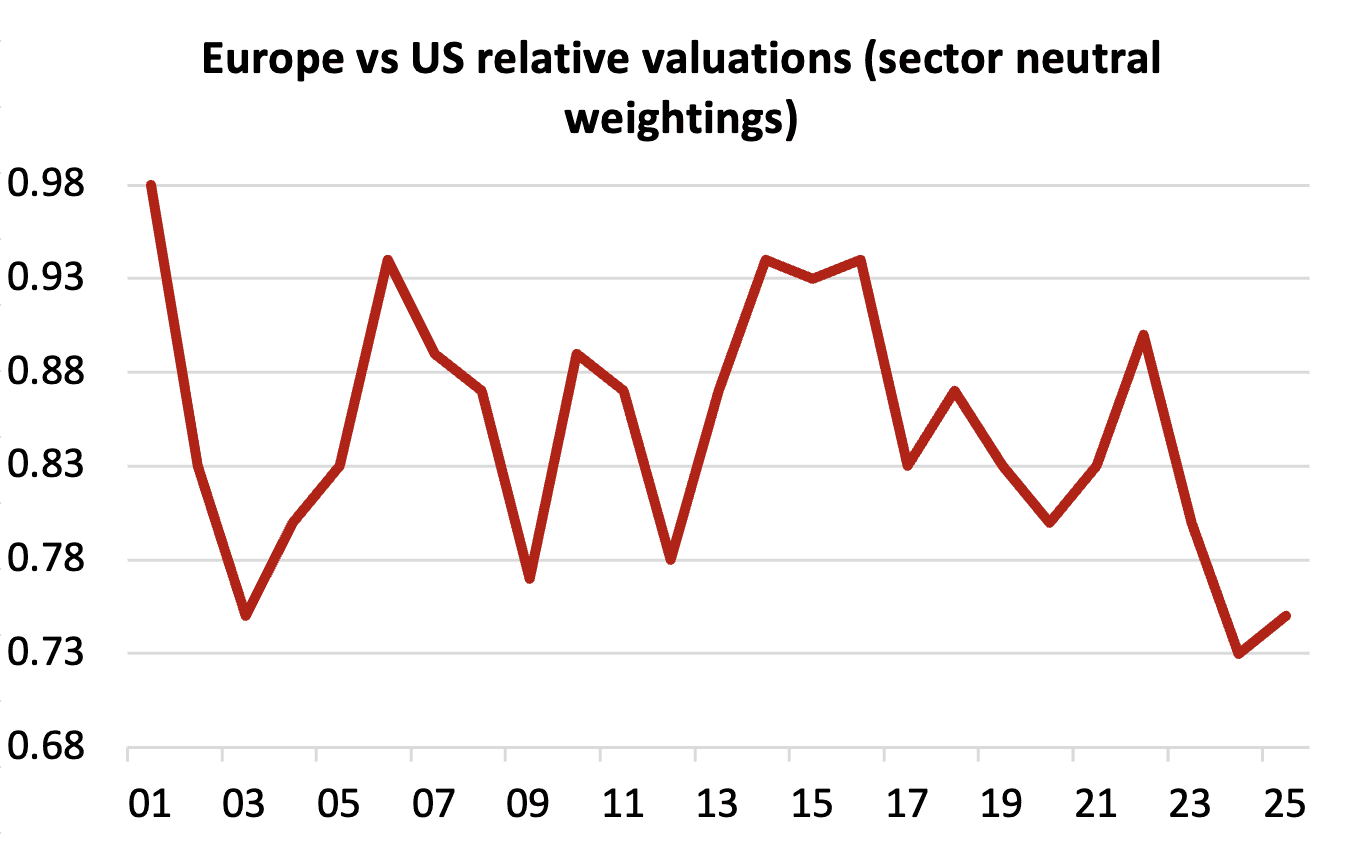
There are a lot of great companies listed in Europe that are trading at attractive valuations, so there are lots of good opportunities. Although we recognise the list of structural issues referenced in Mario Draghi’s recent report makes it harder for the continent to produce the next Apple or Amazon, the below chart shows the pure 25% discount for European equities vs US. This chart displays a neutral sector weighting comparison (the US has more growth sectors).
To date, the export nature of Europe’s main firms has provided some protection against domestic economy weakness, but there are now clear and obvious concerns regarding Trumps proposed tariffs. We hope the eventual impact will be less than feared, but some sectors will be more exposed than others if tariffs are implemented. European savings rates are still well above pre-pandemic levels as the region’s typically more sensible citizens did not splurge in the same way as their US counterparts. As ever, we are unlikely to see Europeans go out and spend with any degree of exuberance, but see potential for a pickup in economic activity, from a low base.
There are a lot of great companies listed in Europe that are trading at attractive valuations, so there are lots of good opportunities. Although we recognise the list of structural issues referenced in Mario Draghi’s recent report makes it harder for the continent to produce the next Apple or Amazon, the below chart shows the pure 25% discount for European equities vs US. This chart displays a neutral sector weighting comparison (the US has more growth sectors).
China
China
Chinese authorities were slow to stimulate the economy, but they’ve finally announced some fiscal and monetary support to boost activity, although there has been a lack of detail. The initial market reaction was swift, and it helped the CSI China 300 finish the year up over 20%, but the rally has since fizzled. The election results in the US are likely to have a big impact, so it is very conceivable that the Chinese authorities have been waiting to see whether Trumps would be re-elected before deciding on the level of stimulus.
Chinese assets are extremely cheap and there has been a growing narrative that the region is uninvestible.
Chinese authorities were slow to stimulate the economy, but they’ve finally announced some fiscal and monetary support to boost activity, although there has been a lack of detail. The initial market reaction was swift, and it helped the CSI China 300 finish the year up over 20%, but the rally has since fizzled. The election results in the US are likely to have a big impact, so it is very conceivable that the Chinese authorities have been waiting to see whether Trumps would be re-elected before deciding on the level of stimulus.
Chinese assets are extremely cheap and there has been a growing narrative that the region is uninvestible.
As Howard Marks, one of the great investors of our era said in a recent interview: "That word is music to my ears… China is on the pile of things that people feel ill about, and it's on that pile that you find the bargains”.
As Howard Marks, one of the great investors of our era said in a recent interview: "That word is music to my ears… China is on the pile of things that people feel ill about, and it's on that pile that you find the bargains”.
As Howard Marks, one of the great investors of our era said in a recent interview: "That word is music to my ears… China is on the pile of things that people feel ill about, and it's on that pile that you find the bargains”.
Global longer term bond yields
Global longer term bond yields
Global longer term bond yields moved meaningfully higher over the last few months, even though most major central banks have been cutting rates. The bond vigilantes have been pushing back against governments’ very loose fiscal policies, by demanding an extra return to hold their debt. Investors have been selling debt from big countries such as the UK, France and the US, as they are running large deficits and have large debt burdens. Germany’s debt brake has ensured an entirely different approach, but it led to the recent collapse of its government and a “snap” election this February. The UK’s heavy-borrowing budget in October helped trigger a sell-offs in gilts, pushing the 10-year yield to its highest level since 2008 and 30-year interest costs to the most this century (notably above Liz Truss’ finest hour).
These higher yields are putting government finances under pressure and the US isn’t immune. US bond yields have moved up since the election result, with the 10 year once again surpassing 4.7%. Equity investors have looked through the higher longer term yields for now, but higher yields have traditionally been a headwind. US equities have been the envy of the world for the past fifteen years, with particularly outsized performance returns for the last two. They can continue to move higher, but current valuations suggest much more muted future returns.
We are mindful of the elevated concentration and valuation risks, so we stay focused on fundamentals. Will this finally be the year the equal weighted S&P 500 outperforms the concentrated market cap weighted index? Or will the ever widening gap between US equities and their international peers finally narrow? Given the current starting positions, these are the big themes that we will be looking out for in the year ahead. The general level of market uncertainty has rarely been so high, and wide-ranging, but there is no choice but to embrace it in a responsible way. Every year is challenging for investors, and 2025 won’t be any different.
Global longer term bond yields moved meaningfully higher over the last few months, even though most major central banks have been cutting rates. The bond vigilantes have been pushing back against governments’ very loose fiscal policies, by demanding an extra return to hold their debt. Investors have been selling debt from big countries such as the UK, France and the US, as they are running large deficits and have large debt burdens. Germany’s debt brake has ensured an entirely different approach, but it led to the recent collapse of its government and a “snap” election this February. The UK’s heavy-borrowing budget in October helped trigger a sell-offs in gilts, pushing the 10-year yield to its highest level since 2008 and 30-year interest costs to the most this century (notably above Liz Truss’ finest hour).
These higher yields are putting government finances under pressure and the US isn’t immune. US bond yields have moved up since the election result, with the 10 year once again surpassing 4.7%. Equity investors have looked through the higher longer term yields for now, but higher yields have traditionally been a headwind. US equities have been the envy of the world for the past fifteen years, with particularly outsized performance returns for the last two. They can continue to move higher, but current valuations suggest much more muted future returns.
We are mindful of the elevated concentration and valuation risks, so we stay focused on fundamentals. Will this finally be the year the equal weighted S&P 500 outperforms the concentrated market cap weighted index? Or will the ever widening gap between US equities and their international peers finally narrow? Given the current starting positions, these are the big themes that we will be looking out for in the year ahead. The general level of market uncertainty has rarely been so high, and wide-ranging, but there is no choice but to embrace it in a responsible way. Every year is challenging for investors, and 2025 won’t be any different.
Global longer term bond yields moved meaningfully higher over the last few months, even though most major central banks have been cutting rates. The bond vigilantes have been pushing back against governments’ very loose fiscal policies, by demanding an extra return to hold their debt. Investors have been selling debt from big countries such as the UK, France and the US, as they are running large deficits and have large debt burdens. Germany’s debt brake has ensured an entirely different approach, but it led to the recent collapse of its government and a “snap” election this February. The UK’s heavy-borrowing budget in October helped trigger a sell-offs in gilts, pushing the 10-year yield to its highest level since 2008 and 30-year interest costs to the most this century (notably above Liz Truss’ finest hour).
These higher yields are putting government finances under pressure and the US isn’t immune. US bond yields have moved up since the election result, with the 10 year once again surpassing 4.7%. Equity investors have looked through the higher longer term yields for now, but higher yields have traditionally been a headwind. US equities have been the envy of the world for the past fifteen years, with particularly outsized performance returns for the last two. They can continue to move higher, but current valuations suggest much more muted future returns.
We are mindful of the elevated concentration and valuation risks, so we stay focused on fundamentals. Will this finally be the year the equal weighted S&P 500 outperforms the concentrated market cap weighted index? Or will the ever widening gap between US equities and their international peers finally narrow? Given the current starting positions, these are the big themes that we will be looking out for in the year ahead. The general level of market uncertainty has rarely been so high, and wide-ranging, but there is no choice but to embrace it in a responsible way. Every year is challenging for investors, and 2025 won’t be any different.
Ciaran Carolan 10/01/2025
Ciaran Carolan 10/01/2025

At DFP, we offer financial management advice to individuals, charities, corporate partnerships and businesses, which is specifically designed around their individual circumstances.
Docal Ltd. t/a DFP Pension & Investment Consultants is regulated by the Central Bank of Ireland.
Registered Address: 1st Floor Quayside Business Park,
Mill Street, Dundalk, Co. Louth. Registered in Ireland, company registration number 390947
At DFP, we offer financial management advice to individuals, charities, corporate partnerships and businesses, which is specifically designed around their individual circumstances.
Docal Ltd. t/a DFP Pension & Investment Consultants is regulated by the Central Bank of Ireland.
Registered Address: 1st Floor Quayside Business Park,
Mill Street, Dundalk, Co. Louth. Registered in Ireland, company registration number 390947
At DFP, we offer financial management advice to individuals, charities, corporate partnerships and businesses, which is specifically designed around their individual circumstances.
Docal Ltd. t/a DFP Pension & Investment Consultants is regulated by the Central Bank of Ireland.
Registered Address: 1st Floor Quayside Business Park,
Mill Street, Dundalk, Co. Louth. Registered in Ireland, company registration number 390947